


Are there any good reasons not to upgrade to full fibre broadband?
There may be reasons not to install full fibre broadband even when it’s available in your postcode
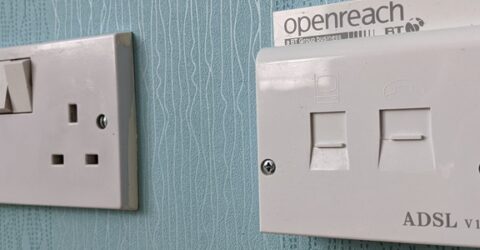
Although technology is constantly evolving and (usually) improving, the cutting edge of progress isn’t always a good place to be as a consumer.
New adopters pay a premium to acquire hardware or software which is often imperfect initially, and which could end up prematurely obsolete if it doesn’t catch on.
The internet has led us up a few technological cul-de-sacs, such as Prestel and Midband.
Full fibre broadband has undoubtedly been a success story, eclipsing sluggish copper-powered ADSL and Fibre to the Cabinet connections.
Yet upgrading to full fibre might not be the right option for everyone, even though it’s the fastest method of sending and receiving digital data.
Here’s why.
Cost
The last few years have been ruinous for household finances, from lockdowns and furlough to fiscal drag and (in the private sector, at least) pay rises failing to match inflation.
A full fibre broadband connection will unquestionably outperform any other method of connection, from 4G/5G through to Openreach-powered ADSL and FTTC connections.
Yet the additional cost of that extra bandwidth might be a bitter financial pill to swallow, especially at a time of rising taxes and falling living standards.
Trust
Openreach sockets and cables provide a broad choice of ISP, from household names like Sky and BT/EE to the likes of italk and NOW Broadband.
Conversely, full fibre connections are usually proprietary, installed and operated by firms like Virgin Media.
If you’ve had a poor experience with a full fibre ISP in the past, or trust your existing Openreach-powered provider, switching to an alternative provider may seem like a gamble.
Convenience
If your existing internet connection works, the desire to upgrade it will inevitably be lessened. How many times have you attempted something only to wish you hadn’t bothered?
A new ISP means a new router, WiFi passcode and firmware interface. It means reconnecting all existing devices and forgetting the old network. It can even affect whole-home coverage.
Routers come in many forms. Just because full fibre a connection is quicker doesn’t mean the router channelling its data will offer a superior range, be more reliable or need fewer reboots.
Administration
Quite apart from the mechanics of setting up a new broadband network at home, switching ISPs involves a fair amount of administration.
There are new payment details to set up, and squaring off your old account can be time-consuming, especially if any disagreements arise about what’s been paid or when.
New payment dates might not suit as well as the old ones, while anyone potentially moving house in the next two years should avoid the default 24-month new customer contract.
Is full fibre broadband available everywhere now?
The preceding points are based on the assumption full fibre is in your street, which isn’t unreasonable now that 91 per cent of UK premises are within reach of gigabit speeds.
The other nine per cent have the right to feel aggrieved about the lack of gigabit-capable networking nearby, especially as the pace of rollout is slowing due to market pressures.
While over 97 per cent of Northern Ireland has gigabit broadband availability, the figure in Scotland is just 86.5 per cent, due to the country’s sheer size and scattered rural population.
Ofcom estimates that almost 40,000 homes can’t achieve average download speeds in excess of 10Mbps, regardless of whether they use hardwired or mobile network coverage.
In these locations, satellite broadband might be an option, though it’s often expensive and prone to latency.