

What’s your broadband connection called?
We investigate the consumer confusion around broadband connection terminology
Modern technology has always been heavily reliant on jargon, acronyms and abbreviations to make it easier to discuss.
However, those acronyms and slang terms often serve to confuse the general public, especially if people aren’t already familiar with a particular topic or industry.
New car buyers are bombarded by a hurricane of technology buzzwords and abbreviations in sales brochures and dealerships. SRS, AEB, TCS, TPMS, HUD…the list goes on.
It’s a similar story in computing, where many people struggle to tell their HTTPS from their HTML5, while the word ‘port’ has three completely unrelated meanings.
And this leads naturally onto the perennially confusing topic of home internet provision.
This is a world where Internet Service Providers deliver data at Gigabits Per Second along Fibre To The Premises cabling – all condensed into abbreviations like ISP, Gbps and FTTP.
Pretty fly for a WiFi
A survey of two thousand UK adults conducted earlier in the autumn concluded that there is widespread confusion about the nature of home internet provision.
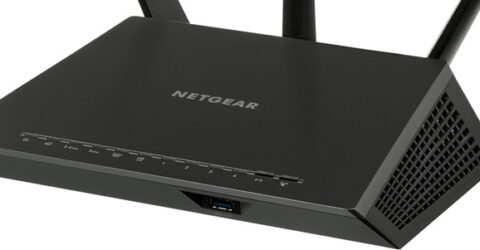
A third of consumers describe their domestic internet connection as ‘the WiFi’, even though WiFi is only one aspect of the service ISPs provide.
(WiFi describes wireless data distributed via broadband routers. It doesn’t encompass physical connections between a router and a device via Ethernet cables or Powerline adaptors.)
The same survey concluded that ‘internet’ was the second most commonly used term for connectivity, with ‘broadband’ third.
These are both accurate terms for the service ISPs provide. The same cannot be said for the fourth and fifth most frequently used words – ‘wireless’ and ‘connectivity’.
Yes, home broadband is a form of digital connectivity, and yes, much of it is wireless. But neither of these terms really describes the service consumers are receiving.
After all, 4G and 5G networks could also be described as ‘wireless’ or ‘connectivity’, even though they are standalone services designed to support mobile devices like smartphones.
Does any of this really matter?
It really does.
Imagine ringing your ISP and telling them the WiFi or wireless is down, when you actually mean the entire home internet connection is offline.
Their first reaction will be to ask you to hardwire a device into your router, because they’ll assume hardwired connections remain operational.
This obviously won’t achieve anything, other than stressing out the consumer and confusing the technical support personnel.
Alternatively, imagine a scenario where a wireless device is causing interference across the 2.4GHz WiFi network.
If you assume WiFi is the sum total of an ISP’s service provision, you wouldn’t realise that connecting a device to the router with an Ethernet cable will ensure that device doesn’t endure any more interference.
ISP technical support staff also won’t understand what ‘connectivity’ is describing, since it might mean the connectivity of a particular device, the WiFi, or the whole broadband service.
Equally, claiming your router isn’t working would be misleading if the problem is actually to do with a cable outside the home, a faulty socket or a network outage.
In terms of troubleshooting and resolving problems, using the correct words is very important.
This is why there needs to be a greater awareness of the difference between a broadband connection into residential homes, and the WiFi which is wirelessly distributed by routers.
ISPs have their part to play in raising levels of public awareness, as do consumer-facing platforms like BroadbandDeals – but so do the wider public.
Next time “the WiFi’s down”, take a moment to think whether that’s really what’s happening…