

Where does my broadband router come from?
Broadband routers are manufactured around the world, yet their country of origin can affect consumer trust.
It’s often tempting to ignore geopolitical events, yet their impact occasionally resonates through society in unexpected ways.
For instance, a global consumer boycott of American products and services has been gathering momentum over the last year, in response to the policies and actions of the current US administration.
There have also been less concerted boycotts of products from Russia, Israel and other nations which have attracted criticism from certain quarters.
However, it’s often unclear where specific products and services actually originate.
This is certainly true of broadband routers – the unsung heroes of the internet, enthusiastically unpacked and set up before being roundly ignored until their lights start flashing.
Routers are manufactured in many different countries, but it seems consumers place more trust in products from some regions than others…
Borders and boundaries
A couple of months ago, YouGov published a survey of over 5,000 people from the UK and four other European countries, regarding broadband routers.
While only ten per cent of respondents said they distrusted European router manufacturers, almost half expressed distrust towards Chinese models.
Given the highly publicised rejection of Huawei infrastructure in the UK’s 5G network, it’s unsurprising that British consumers are demonstrating antipathy towards Chinese telecommunications.
Similar sentiments are directed towards Russian manufacturers, though Russian goods in our homes are almost non-existent compared to ubiquitous American brands.
Indeed, British consumers are unlikely to have encountered Russian broadband router brands such as Rubetek or Eltex.
Chinese products by Xiaomi and TP-Link enjoy far greater brand recognition in the UK.
Teltonika and AVM are the leading European manufacturers, the latter often trading under the curiously titled FRITZ!Box brand.
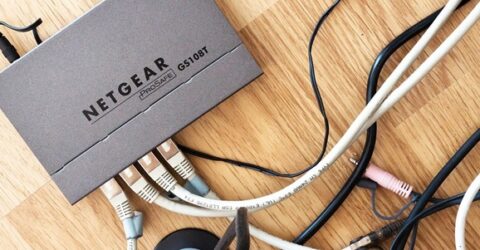
Other names commonly adorning broadband routers include Cisco and Netgear from America, or Taiwan’s ASUS and D-Link.
What makes a good broadband router?
Many people would struggle to identify the country of origin of these companies, just as most consumers probably couldn’t name their current router’s manufacturer without checking.
It’s also worth noting that a product manufactured in one country will probably incorporate hardware and components from several other nations.
As such, a broadband router’s country of origin should be treated as secondary to its performance, unless there are concerns about those origins underpinning safety risks.
The YouGov survey found over 90 per cent of European respondents rated security as either important or very important, which might explain the geopolitical resistance to certain foreign brands.
Other attributes attracting similarly high levels of consumer importance included reliability, price and speed.
Yet factors like reliability and the speed of data throughput often only become apparent after living with a router for a while.
Open to change
Most consumers will passively accept the limitations (and country of origin) of an ISP-supplied router, even though it’s often possible to address these issues.
That’s because broadband piped through Openreach cabling can be distributed around the home by any router – not just the one bundled into your contract.
Customers with ISPs like Sky, BT, Plusnet or EE could purchase and install a third-party product from any manufacturer, resolving issues of performance, reliability – and nationality.
As we’ve previously reported, replacing your supplied broadband router is fairly straightforward, requiring no technical knowledge.
Things are more complicated with full fibre providers like Virgin Media, Grain and Hyperoptic.
Here, the existence of bespoke fibre cabling means proprietary routers are required to act as the first point of contact.
It may be possible to plug a third-party router into the built-in or ISP-specific one, effectively turning the latter into a conduit, but few people go to such effort.