

Are we about to say goodbye to terrestrial TV?
Terrestrial TV appears to be on borrowed time, but the BBC’s position may be reinforced through legislation
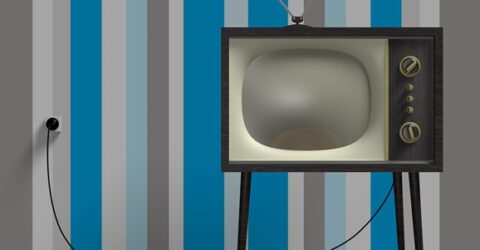
Any new technology brings winners and losers, and the rapid rise of streaming media services has been at the expense of terrestrial television.
In an age of numerous competing entertainment options, from social media to streaming platforms, audience share of the UK’s five terrestrial channels is plummeting.
At the same time, consumption of the same programming via IPTV (content viewed through an internet connection) is soaring.
It costs a lot of money to beam TV signals into homes across the land, at a time when ITVX and My5 enable people to watch scheduled programming whenever they wish.
Millions of households also receive TV packages as part of home broadband contracts from Sky and Virgin Media, with more channels and greater control (pausing, recording, etc).
A keenly anticipated UK Government green paper arrived a couple of weeks ago, casting some light on this nuanced situation and anticipating future industry plans.
Space invaders
Days before Andy Burnham swept into 10 Downing Street, the Department for Culture, Media and Sport updated their Watch This Space green paper, setting out Westminster’s future media policy direction.
It starts by acknowledging the fragmentation of television and the blurring of social media platforms, as well as the oblique social media algorithms that determine what people see.
The UK’s domestic public service media providers are the BBC, ITV and STV (Scotland), Channel 4 and S4C (Wales) and the unambiguously titled 5.
As well as entertainment, these broadcasters have varying obligations in terms of news and sport coverage, such as showing Crown Jewels sporting events.
The increasing distribution of fake news and misinformation via social media places greater responsibility on terrestrial TV firms to offer trustworthy news and champion media literacy.
As internet-delivered viewing (IPTV) creates a hybrid landscape among audiences, future TV distribution is rising to the forefront of national debate.
The green paper proposed a target for digital terrestrial television (DTT) services to be switched off in December 2034.
However, an extension to 2044 is also being proposed, in case audiences struggle to adapt or if high-speed home broadband isn’t available in enough dwellings by then.
Bear in mind that DTT has no bandwidth requirements, meaning it’s not affected by sluggish ADSL connections, the internet rush hour, network outages or bad weather.
Crucially, it’s also free to access (licence fee notwithstanding) at a time when inflation, tax increases and threshold freezes are consuming ever larger amounts of household income.
If DTT was switched off tomorrow, the estimated 2.8 million people currently living without the internet would be unable to watch any terrestrial television, which seems unreasonable.
A licence to print money?
Another complicating factor in discussions about the future of terrestrial TV is the presence of the national state broadcaster and its role in a rapidly evolving world.
The licence fee has long been a contentious household bill, and evasion stretches back decades before the advent of rival entertainment from Netflix and Disney.
Older readers might remember an episode of anarchic Eighties sitcom The Young Ones where Vyvyan eats a TV set to thwart a passing licence detector van.
Owning a TV set doesn’t mean you’re automatically going to watch BBC content, especially if you exist at the outer edges of the political spectrum.
Yet in its green paper submission earlier this year, the BBC reported only 80 per cent of people currently pay the licence fee even though 94 per cent routinely access its services.
In light of a lack of enforcement, the UK Government is now considering levying the licence fee on anyone with a streaming media subscription service.
If you own a device capable of supporting Netflix, it could run the BBC’s iPlayer, which many people use in lieu of watching scheduled programming on terrestrial TV.
Levying the licence fee on streaming subscribers would be less politically toxic than allowing the BBC to host adverts or allowing endemic non-payment to continue unchecked.
Almost every country on Earth has a state or public service broadcaster, so abolishing the BBC would be unimaginable – however much its critics might relish the prospect.