


Broadband cable theft is on the rise in the UK
Broadband cable theft brings outages and disruption to affected communities.
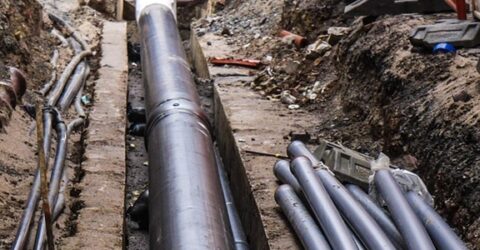
Thieves and vandals have always been an unwelcome element of life in Britain.
From rooftop lead-scroungers to the destroyers of public pay phones, every generation has had its share of miscreants who will steal anything that’s not bolted down.
Sometimes, even things which are bolted down (or buried underground) can be ‘liberated’ by a truly committed gang of thieves.
A spate of news stories has illustrated the growing issues with broadband cable theft, triggering internet blackouts from Belfast to Birmingham.
So what’s behind this upsurge in broadband cable thefts, and how should consumers respond?
Cable and wireless
Although we tend to think of home broadband as wireless (thanks to the WiFi connections our routers permit), physical cables still convey broadband connectivity into our homes.
Cables are buried below our streets, but the need for regular maintenance means they’re easily accessed through manhole covers and pavement exchange boxes.
At the end of January, firearms officers on routine patrol in Birmingham discovered three men in a subterranean tunnel attempting to steal copper Openreach cables.
In the same week, two thousand Lincolnshire properties were abruptly cut off by a brazen rush-hour theft of copper telecoms cabling.
The wholesale appropriation of copper cables reflects the metal’s high resale price, though press articles blaming the cost of living crisis are disingenuous.
These are not impromptu acts by impoverished families, but pre-planned thefts by teams of well-briefed criminals who’ve invested in high-vis clothing and specialist tools.
In February, the Daily Mail reported that Eastern European organised criminal gangs are earning up to £10,000 a night through broadband cable theft.
Needless to say, ISPs and Openreach are not taking these issues lightly.
Arrests are rising and forensic liquid markers are being used to track the copper, while the fibre optic cables which increasingly underpin modern broadband services are almost worthless.
The Birmingham thieves were caught in a tiny underground tunnel by armed officers and a police dog, which isn’t a scenario any self-respecting criminal would wish to experience.
However, full fibre cables often share duct space with older copper ones. Criminals may mistake the two, or damage one while attempting to steal the other.
And while the prevalence of copper in our broadband infrastructure is declining rapidly thanks to the national fibre roll-out, copper thefts are likely to continue for some time.
ISPs are obviously responsible for protecting and repairing their infrastructure, but what can consumers do to ensure they aren’t reduced to living without internet access at home?
Fail to prepare…
Firstly, check whether your provider (particularly if it’s an altnet) has rolled out full fibre cabling. If so, it’s unlikely to become a target, because fibre cabling has little resale value.
If part of your local network still relies on copper (Fibre to the Cabinet connections of 35-65Mbps, for instance), consider preparing one or two contingencies.
Buy a wireless dongle or MiFi hub which draw data from a 4G or 5G mobile network. These respectively plug into one web-enabled device or generate a small WiFi network.
MiFi hubs keep multiple devices connected in the event of a hardwired broadband outage, including tablets and smart doorbells/speakers.
Also look to migrate your smartphone contract to the network with the fastest local connectivity, so your phone can be used to check emails and communicate if there’s an outage.
It’s even possible to tether a smartphone to a desktop or laptop computer, using the former’s 4G/5G connection to power the latter, though this technical process burns through a lot of data.